> Communication
> Analytical and critical thinking
> Time management
> Leadership
> Active listening

Updated: April 2026
Are you interested in studying business in Australia, but unsure about whether it’s the right fit for you? Or perhaps you’re wondering about what your prospects will look like after graduation?
To assist with your research, we will answer three main questions:
Here are the 6 top reasons to pursue a degree or qualification in the field of business.
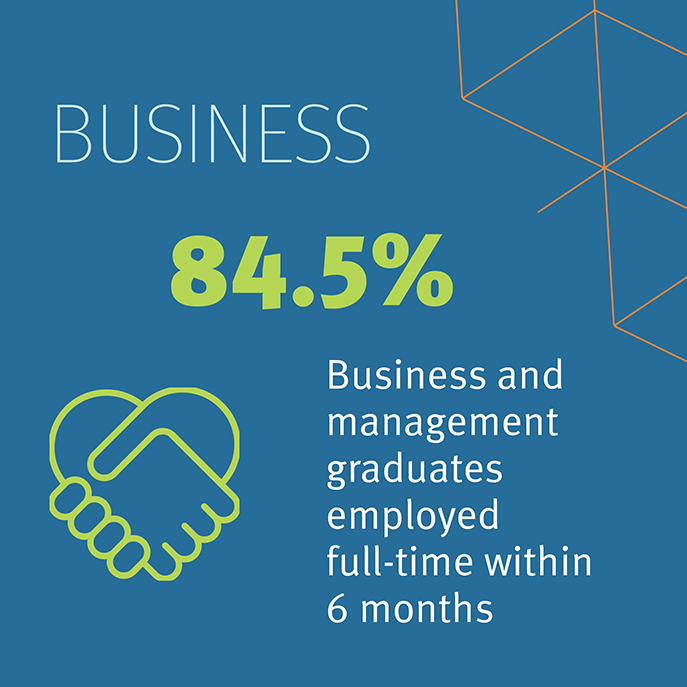
Studying business has traditionally been a solid career choice and remains in demand today as an increasingly globalised business market calls for managers and leaders who can help businesses navigate emerging technologies, complex projects and turbulent financial markets. The 2025 Corporate Recruiters Survey reported an increase in hiring MBA and management master's graduates.
The demand for professionals for many areas of business will remain strong.
Business analytics
The analytics sector is booming. According to Expert Market Research, the global analytics market was valued at US$65.57 billion in 2025 and is projected to reach US$426.75 billion by 2035, registering a compound annual growth rate (CAGR) of 20.6%.
Project management
According to the Project Management Institute, the global economy needs 25 million new project professionals by 2030.
Accounting
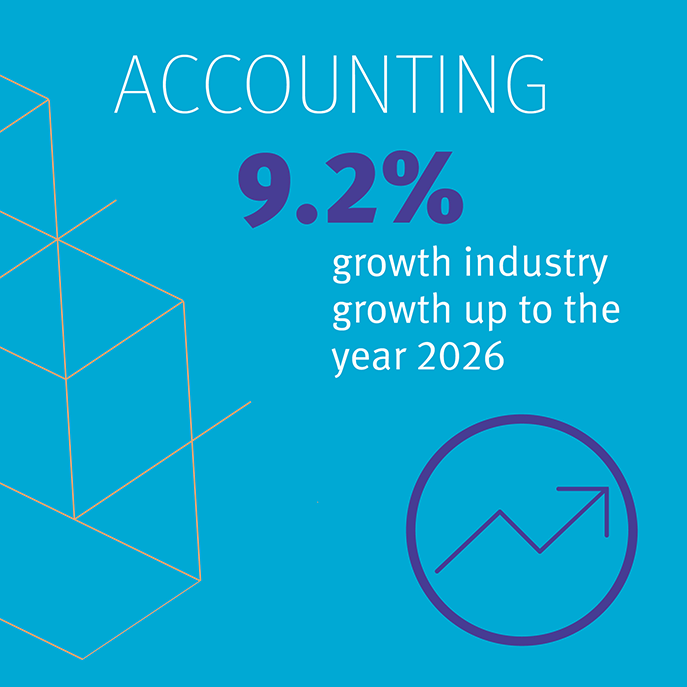
The Australian Bureau of Statistics has forecasted that Australia will require over 338,000 accountants by 2026. Job Ads for Accounting Professionals on SEEK (job search website) has grown 33% year on year.
Healthcare
Health Care and Social Assistance is the largest employing industry in Australia with 15.6% workforce share. According to Jobs and Skills Australia, there are over 2.3 million people currently employed in this industry and employment is expected to continue to grow. This in turn will increase demand for non-medical managers with business management qualifications who can take on projects, innovate in the health space and embrace emerging technologies in telemedicine and diagnostics.



Given you’re considering making an investment in your education, it’s understandable that you will want to know some idea of what you can expect to earn upon graduation and as you progress in your career.
Salary expectations will vary depending on your specific role and industry. However, statistics show the national average base salary for a business manager is $100,000 per year in Australia.
According to a survey by the Graduate Management Admissions Council (GMAC), the salary prospects for MBA graduates are forecast to recover to pre-pandemic levels as recruiters project a “robust demand” for business school graduates.
In GMAC's 2025 Corporate Recruiters SurveyCorporate Recruiters Survey, 99% of employers were confident in graduate business education, pointing to skills such as communication, strategic thinking and innovation. In the US, many business postgraduates who enter consulting at large firms receive an average base salary of US$110,000. The Financial Times 2025 MBA Ranking revealed that salary increases 3 years after graduation can exceed 100%.
Studying a degree in business and management gives you a wide scope to pursue a career across multiple disciplines. Business programs have the benefit of being flexible to adapt to your specific area of interest. Majors of our Bachelor of Business courses include Accounting, Marketing, Management and Hospitality and Tourism Management.
If you are unsure of exactly what industry or role you might want to go into, you can choose to study a general Bachelor of Business or a Master of Business Administration.
Or, you can pursue a major or specialisation to align your studies more closely to your career goals or passions. For example, at Kaplan Business School (KBS), we offer eight MBA specialisations which are Project Management, Health Services Management, Tourism and Hospitality Leadership, Digital Management, Entrepreneurship, Women in Leadership and International Leadership. You can choose to specialise in two of these, without adding any additional time to your degree.
Studying a business degree with a major or specialisation gives you the opportunity to gain the foundational skills to help businesses thrive such as knowing how to write a financial plan and track profits and losses. At the same time you will also take a deep dive into specific industry skills that are in high demand, such as the ability to manage complex projects or lead and manage teams.
Transferable skills are abilities that can be used across different industries and jobs such as communication skills, teamwork and critical thinking. According to World Metrics, 86% of workers and executives cite soft skills as equally as important as technical skills for job success.
Even if you already have transferable skills, you can work to improve them and acquire new ones that are sought after by employers. According to an analysis conducted by Deloitte, soft-skill intensive occupations will account for two-thirds of all jobs by 2030.
Studying business will help you with technical skills and soft skills such as problem-solving, collaboration, task management and presentation skills. Practising and honing these skills can contribute to career progression and earning potential.
Some of the top soft skills you will gain with a business degree include:
Communication
The CSIRO reports that communication skills have seen the fastest growth in demand among all skill sets in Australia, with an average annual increase of 15.7% since 2009. With remote working becoming the norm, it is now more important than before to learn how to talk and listen to each other.
Analytical and critical thinking
The ability to think critically will help you to problem-solve effectively, add value to a business's day-to-day- operations and contribute to strategic planning.
Time management
Time is a valuable commodity, so being able to manage it well will ensure a productive working week.
Leadership
The ability to guide projects, communicate a strategy or vision, and motivate your team, lies at the core of most business programs and can be instrumental in helping you to progress in your career whichever direction it takes you in.
> Communication
> Analytical and critical thinking
> Time management
> Leadership
> Active listening

Studying business can be a practical way to gain the skills you need to start your own business or venture. A business degree will help you learn how to write a detailed and viable financial plan, obtain financing for your business, track your profits and losses and gain knowledge of other aspects of business management to keep your business profitable.
If your goal is to start your own business you can choose to specialise in entrepreneurship. At KBS, our Master of Business Administration with a specialisation in Entrepreneurship will take you through the fundamentals of entrepreneurship and small business administration, as well as new venture capital raising.
Just as important as the knowledge you’ll gain, are the connections you’ll make. The careers service at a university or business school can help take your networking to the next level. At KBS this includes the opportunity to boost your career prospects through an academic internship, gain access to exclusive networking events and benefit from one-on-one career sessions with our experienced and globally recognised Careers Advisors.
What’s even more valuable for an entrepreneur is the Lifetime of Learning Guarantee that KBS offers. It gives our alumni, unlimited, free and lifelong access to all online classes of the course from which you graduated from and lifelong coaching from our Career Central team. For example, you can study an elective subject that will help you fill a skill gap you are experiencing as you work towards setting up your new business.
The business world is globally connected. Studying business will help you navigate the different rules, processes and structures that comes with managing businesses internationally.
The business programs at KBS have been designed with an international outlook in mind, allowing you to graduate and excel in a career in Australia or globally. This includes subjects such as ‘International Business and Finance’ in which you'll learn about the strategies and structures that businesses need to compete in the international marketplace and operational aspects of international business such as exporting and importing, manufacturing, marketing, human resource management, accounting and financial management.
Your ability to think globally will also be encouraged by your experience in the classroom, with a student mix of more than 90 nationalities. Learning alongside international students will help you become more culturally aware and open you up to new perspectives and ways of thinking.
When weighing up options as to where to gain your qualification, you should consider a few factors. Just looking at academic rankings, often does not tell you about the actual student experience an institution will provide, including support services and employment outcomes.
Systems, however, like the Quality Indicators for Learning and Teaching (QILT), assess both business schools and universities for academic quality and learning, based on student surveys rather than panel judgement.
You can read more about the choice of attending a business school vs university.
Here are 5 top reasons to study business in Australia.
All higher education courses need to be accredited by the Australian education system.
The Australian Qualifications Framework allows countries around the world to recognise your qualifications and issue comparable qualifications for local use. All our courses are accredited by the Tertiary Education Quality and Standards Agency, a national agency regulated by the Australian government to ensure you are receiving the highest quality learning experience.
International students are also protected under Australian law through the Education Services for Overseas Students (ESOS) Act. This framework sets out the standards that Australian institutions must meet in offering education and training services.
The demand for MBA graduates in Australia is strong. In fact, 22% of the world's top CEOs have an MBA (Preply survey, 2022). According to the QS Global MBA Rankings in 2023, Australian MBA graduates have the highest salaries in the Oceania region.
Jobs and Skills Australia is tasked with regularly reviewing the national skills needs of Australia and provides a current labour market rating and a future demand rating for occupations nationally. They predict a job growth of 17% over the 5 years to 2026 for professionals.
Graduates who want to pursue a business career in Australia have many options available to them. After successfully completing your bachelor’s or master’s degree at KBS, you may be eligible to apply for a two-year post-study work arrangement in Australia.
Also, as an international student, you can work up to 48 hours a fortnight while studying in Australia. This means that even while studying, you’ll be able to seek work and potentially even gain practical experience in your field of interest.
Please visit the Home Affairs website.
If you want to have a successful business career, you need to be fluent in the global business language of English. Studying business in Australia will help you to immerse yourself in the language and fast-track your language development.
At Kaplan Business School you can choose to study elective subjects such as ‘Skills for Advanced Business English’ where you will engage in weekly workshops that will present you with real-world business contexts through which grammar instruction, communication practice activities, listening tasks and writing tasks take place.
You also have access to dedicated student support services such as the Academic Success Centre, where you can access help with your assessments and academic language skills via one-on-one sessions with an advisor, workshops, and lectures.


Studying business can span different areas, majors and specialisations depending on the higher education provider. Here we break down some of the study options at KBS.
Degree options
Graduate Certificate in Accounting
Bachelor of Business (Accounting)
Master of Professional Accounting
What you’ll learn
The key knowledge and skills covered across your core subjects will include:
It’s also worth noting that our bachelor’s and master’s degrees are accredited by CPA Australia, CA ANZ and ACCA, and offer a direct pathway to professional certification and employment.
> Corporate Accountant
> Business Risk Manager
> Auditor and Assurance Specialist
> Financial Analyst
> Investigative Accountant

Is accounting right for me?
Accounting has the benefit of offering a clear career path. Traditionally, accountants are responsible for maintaining and analysing financial records for companies, government agencies, and other organisations.
As an accountant, you could also choose to specialise in the strategic side of finance such as forecasting and analysis. At that level, an accounting role can encompass the process of translating numbers into insights that can help inform a business’s decision making.
In terms of skills, working in accounting requires you to be adept with numbers and technology, but also possess the ability to problem-solve and come up with innovative solutions. Attention to detail and analytical skills will likely be part of your day-to-day role as you help an organisation assess financial activities, problem-solve and reduce costs where necessary.
You can read more about the reasons to study accounting and career outcomes in our blog – 6 top reasons to study accounting.
Degree options
Bachelor of Business (Management)
Bachelor of Business (Hospitality and Tourism Management)
What you’ll learn
The key knowledge and skills covered across your core subjects in an undergraduate business management degree will include:
> Management Consultant
> Business strategist
> Business owner
> Customer Service Manager
> Business coach

Specialisations and career outcomes
Is business or management at an undergraduate level right for me?
Curious about how companies build, maintain, and promote brand reputation? Do you see opportunities for businesses to operate more efficiently or solve problems facing society? There are many paths possible with a business degree for people who are energised by problem-solving, full of ideas, have natural leadership skills or tendencies, have numerical skills or an interest in data.
Pursuing business at an undergraduate level will help you acquire business communication skills, high-level problem solving, financial literacy and a host of other transferable skills. Whether you wish to work as a consultant or start your own business, this degree provides an excellent platform for your business career.
You will graduate with a firm understanding of different business environments and develop effective ways to approach, create and execute operational business plans. The insights you gain will be relevant to any industry and will empower you to build productive, ethical and successful teams and organisations.
Degree options
What you’ll learn
The key knowledge and skills covered across your core subjects in a master’s level business analytics degree will include:
> Business Analyst
> Data Specialist
> Reporting Analyst
> Business Consultant
> Social Media Manager

Key skills/traits that will help you thrive
Is business analytics right for me?
The term ‘analytics’ may point to an exclusive focus on technical skills such as algorithm building, coding and programming, however a degree in business analytics, we help you develop technical skills in a business application context.
The job requires critical and creative thinking and problem-solving. It takes a person capable of identifying and healing the cracks in a struggling business or managing the health of a larger corporation. A keen interest in data is essential as it will help shape the solutions you put forward to resolve business challenges.
Business analysts draw on insights from data to maintain the equilibrium between the needs of stakeholders and unmatched opportunities and changes within a business structure. It combines the technical aspects of data analysis with the business acumen you would gain through more traditional business education.
Forecasting, analytics, and diplomacy in business requires creativity. You’ll need to think outside the box and investigate processes instead of taking them at face value. This will help you to envision outcomes and ensure success in new markets, environments, and the rapidly evolving landscapes that businesses operate in. Discover the top 5 in-demand jobs in business analytics.
Degree options
General
Graduate Certificate in Business Administration
Graduate Diploma in Business Administration
MBA – Master of Business Administration
Specialisations
MBA - (Health Services Management)
MBA - (Tourism and Hospitality Leadership)
MBA - (Data-driven Leadership)
MBA - (International Leadership)
What you’ll learn
The key knowledge and skills covered across your core subjects in a general MBA degree will include:
> Chief Executive Officer
> Program Director
> Entrepreneur
> Operations Manager
> Investment Analyst

Specialisations and Career Outcomes
Key skills/traits that will help you thrive
Is business administration right for me?
The Master of Business Administration (MBA) is widely regarded as the preferred qualification for professionals wanting to pursue a career in strategic management.
You will receive an education in business management and leadership, and learn transferable skills including communication, problem-solving, and creative and critical thinking. Industry and academic professionals will provide valuable insights into what it takes to run a business effectively. This includes how to increase productivity and sales, nurture clients and stakeholders, risk management, and how to apply theoretical and practical approaches in strategy development. MBA skills can be applied to a range of different fields, making you a flexible professional.
Studying a specialisation will help you hone precise, industry-specific skills, while still building foundational skills.
At KBS, you have the option of undertaking a dual specialisation which will allow you to gain knowledge and skills in two industry-specific areas.
An MBA can be beneficial for people who want to:
For more information about studying our MBA, you can read our Ultimate Guide to doing an MBA in Australia.
Degree options
Bachelor of Business (Marketing)
What you’ll learn
The key knowledge and skills covered across your core subjects will include:
Key marketing principles
Strategic marketing
Digital marketing
International marketing
Integrated marketing communications including the role of advertising and media
How to conduct market-specific research
Consumer behaviour
> Product Marketing Manager
> Digital Marketing Specialist
> Events Manager
> E-commerce Consultant
> Public Relations Officer

Key skills/traits that will help you thrive
Is marketing right for me?
Marketing focuses on creating, managing and enhancing brands. You will work across different channels and skill areas such as advertising, public relations, digital marketing, social media, and search engine optimisation.
With the adoption of technology, online marketing has significantly grown. Traditional offline marketing like radio, TV and newspapers still exist, but there’s significantly less demand given the huge growth of online platforms.
Marketing requires creativity and collaboration supported by strong interpersonal and communication skills. There’s a strategic component to marketing that focuses on your target audience. You’ll need to understand the motivations and needs of your customers – who they are, what they expect from you and what value you can bring them. You’ll be required to closely follow the evolution of digital platforms and the emergence of social media trends.
Doing some research on different marketing fields can help give you a better idea of the type of roles you can expect to apply for in the industry. These may include:
Degree options
Diploma of Information Technology
Graduate Certificate in Information Technology
Bachelor of Information Technology
Master of Information Technology (Extension)
Master of Information Technology
What you'll learn
The key knowledge and skills covered across your core subjects will include:
Communicating technological problems, solutions and outcomes to stakeholders
Implementing business solutions using technology-based approaches
Working within or managing expert terms to oversee technological initiatives
Ethical, privacy and information security
> Software Engineer
> Data Engineer
> Cyber Intelligence Specialist
> Systems Analyst
> IT Project Manager

Specialisations and Career Outcomes
Key skills/traits that will help you thrive
Is IT right for me?
The IT industry is growing at a rapid rate, driven primarily by the effects of the pandemic which led to companies being dependent on digital technology for the majority of their business operations. According to ACS Digital Pulse 2025, Australia will need 230,000 tech-skilled workers by 2030 to meet digital transformation goals. Discover the top 5 in-demand jobs in IT.
Technology is changing and advancing quickly so if you thrive in a fast-paced environment, enjoy collaborating with people on building new applications and frameworks, developing more efficient and user-friendly information systems, analysing data, and enforcing cyber security, then IT is the right fit for you.
Find out more about our range of undergraduate and postgraduate business courses at Kaplan Business School.


